
Lean Protocol Innovation

Building the Intelligence Layer for Safer Obesity Care

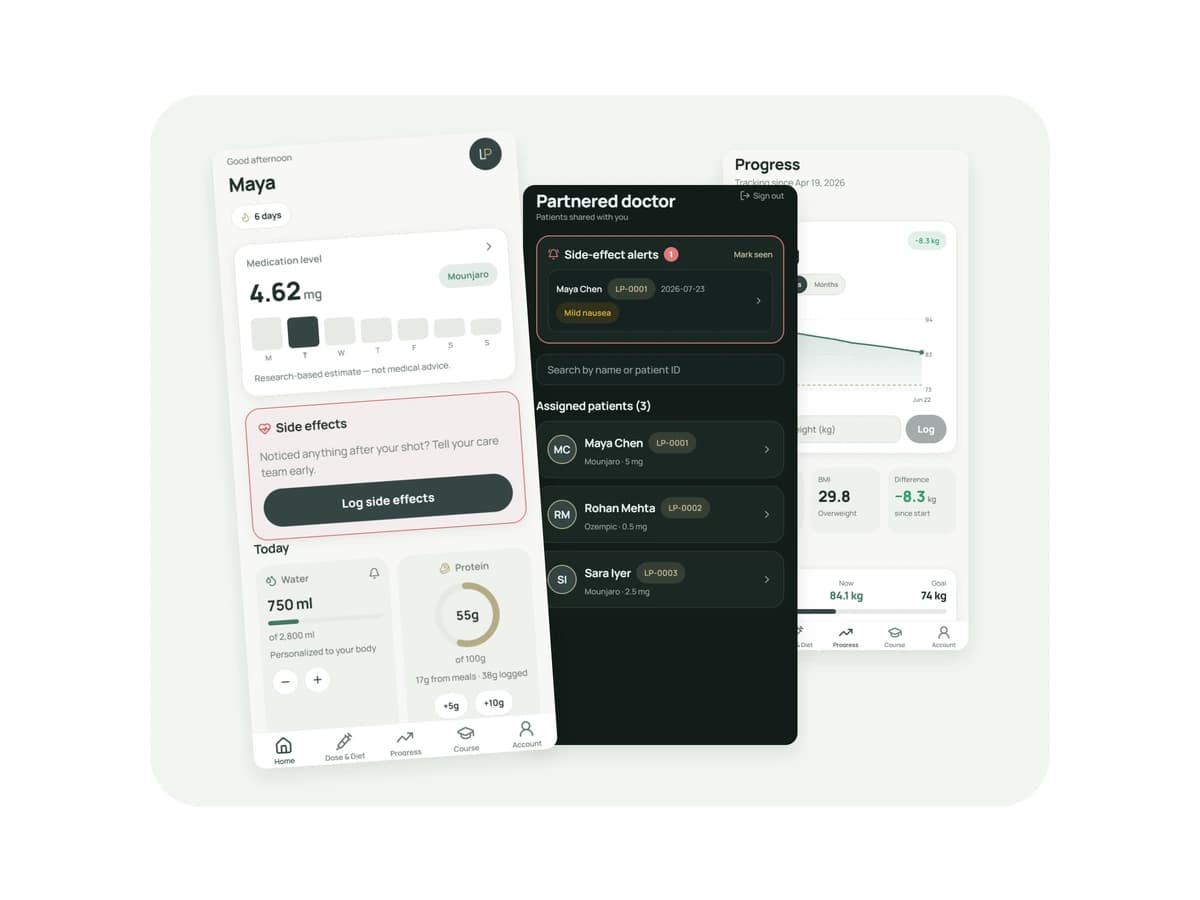
Lean Protocol is developing a clinician-supervised platform that unifies symptoms, adherence, lifestyle, laboratory information and treatment progress into one continuous obesity-care workflow.
  • Clinician supervised
  • Explainable decision support
  • Designed for Indian care settings
Montage of the proposed Lean Protocol platform: a patient application, a clinician review queue and a longitudinal outcomes view.
Illustrative product interfaces representing the proposed connected-care platform.

The platform supports monitoring, prioritisation and care coordination. It does not independently diagnose, prescribe or change medication. Final clinical decisions remain with qualified healthcare professionals.

Positioned for institutional and clinical evaluation

  • DPIIT-recognised startup

    Government of India

  • Clinician-supervised design

    Human accountability retained

  • Explainable decision support

    No unexplained scores

  • Built for Indian care settings

    Urban, Tier-2 and Tier-3

The clinical gap

Obesity treatment continues between consultations. Most care systems do not.

Treatment for obesity is longitudinal. The information that determines whether it is working - and whether it is safe - accumulates in the weeks between appointments, where no system is watching.

01

Symptoms evolve between consultations

Nausea, fatigue and gastrointestinal effects change week to week and are rarely captured in a structured form.

02

Medication adherence may be inconsistent

Missed or delayed doses are often discovered at the next visit rather than when they happen.

03

Nutritional intake can become inadequate

Reduced appetite can quietly cross from intended restriction into insufficient intake.

04

Hydration may decline

Falling fluid intake is a common and under-reported contributor to avoidable side effects.

05

Side effects may go unreported

Patients frequently wait for a scheduled appointment instead of reporting a problem when it appears.

06

Information is fragmented

Doctors, dietitians, laboratories and patients each hold part of the record and none holds all of it.

07

Follow-up depends on manual communication

Coordination runs on phone calls and messages, and scales linearly with headcount.

08

Clinical escalation can occur late

Without prioritisation, the patient who needs attention first is not reliably the patient seen first.

09

Longitudinal outcomes are rarely structured

Programme-level learning is limited when outcomes are not captured in a comparable format.
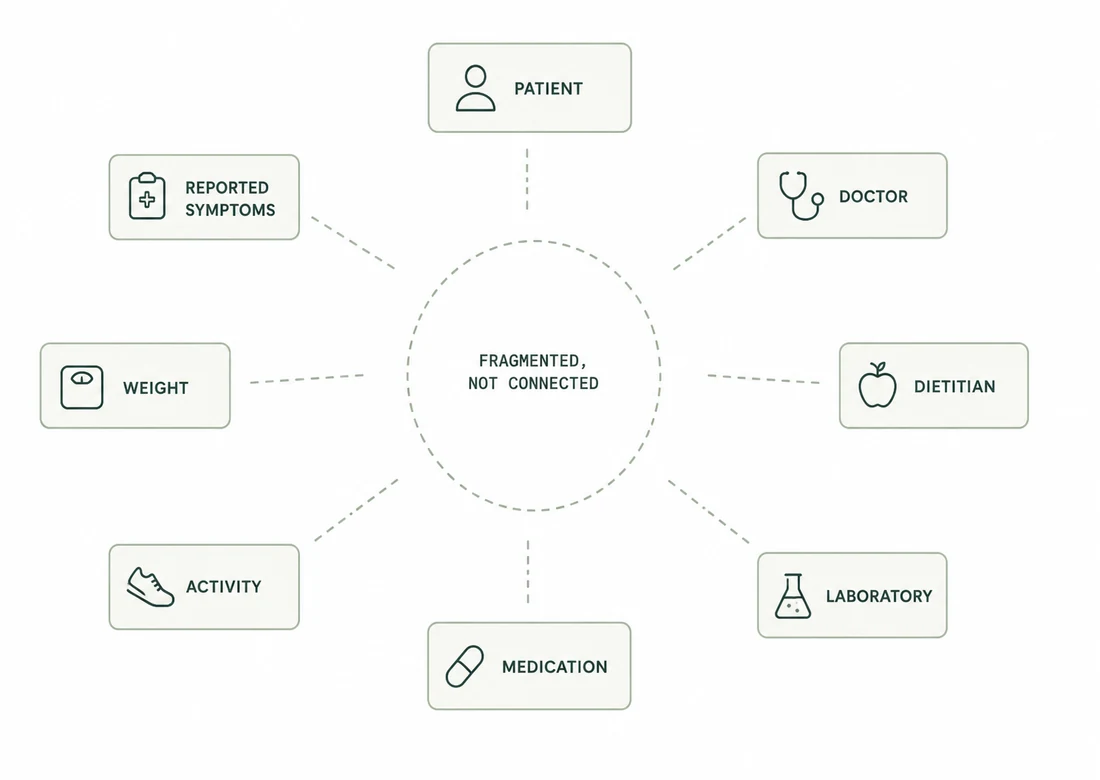
Diagram showing patient, doctor, dietitian and laboratory information held in separate systems with no shared longitudinal record.
Illustrative representation of fragmented obesity care.

Where the information sits today

  • Patient
  • Doctor
  • Dietitian
  • Laboratory
  • Symptoms
  • Medication
  • Weight
  • Activity

No unified longitudinal care layer

The challenge is not simply collecting more data. It is converting relevant patient information into timely, clinically governed action.

Product workflow
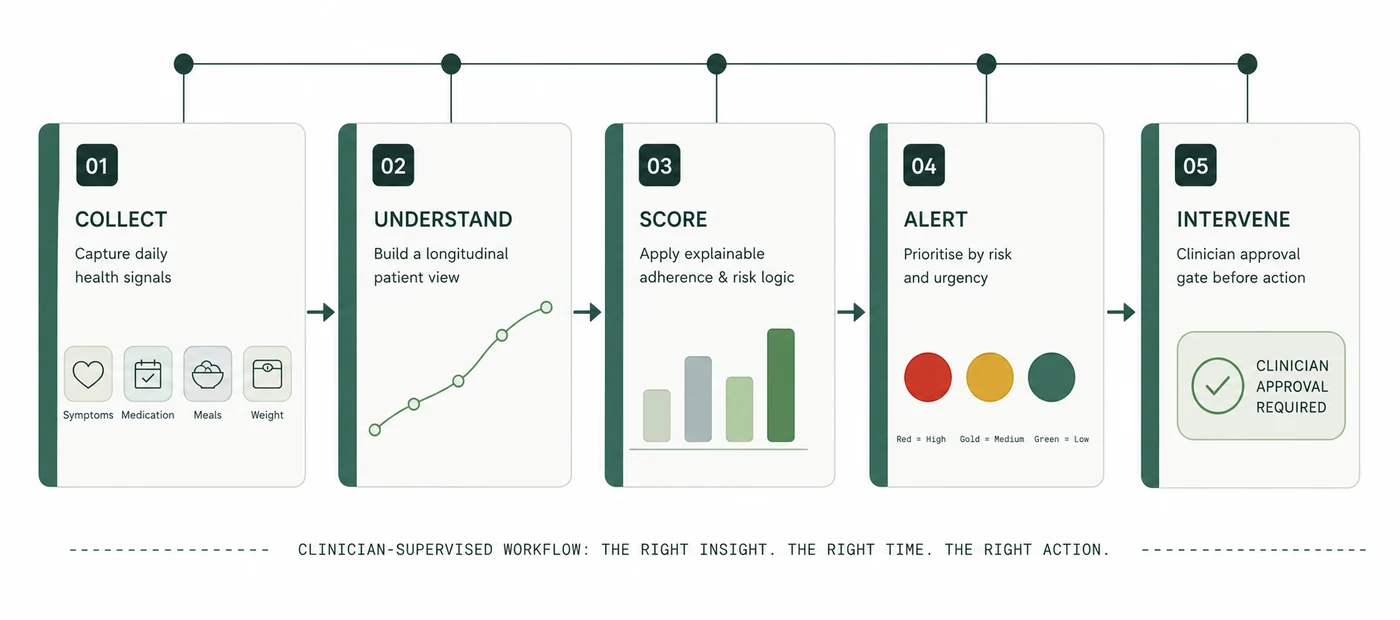
One continuous workflow from patient signal to clinician-approved action

Proposed R&D module
Workflow diagram: collect patient signals, build a longitudinal view, apply explainable scoring, raise reason-coded alerts, and record clinician-approved intervention.
Illustrative workflow. Final logic subject to clinical validation.
  1. 1

    Collect

    Symptoms, medication, meals, hydration, weight, activity and laboratory information.

  2. 2

    Understand

    Build a longitudinal view of the patient's treatment stage and changing context.

  3. 3

    Score

    Apply explainable adherence and risk logic.

  4. 4

    Alert

    Prioritise patients through reason-coded red, amber and green alerts.

  5. 5

    Intervene

    Allow qualified care professionals to review, approve and track actions.

The platform supports monitoring and triage. It does not independently diagnose or prescribe.

Product modules

A connected platform for patients and care teams

Four modules share one longitudinal record: what the patient reports, what the care team sees, and what happens next.

01Existing workflow

Patient Companion

A daily companion for people in active treatment, designed so that reporting takes seconds rather than effort.
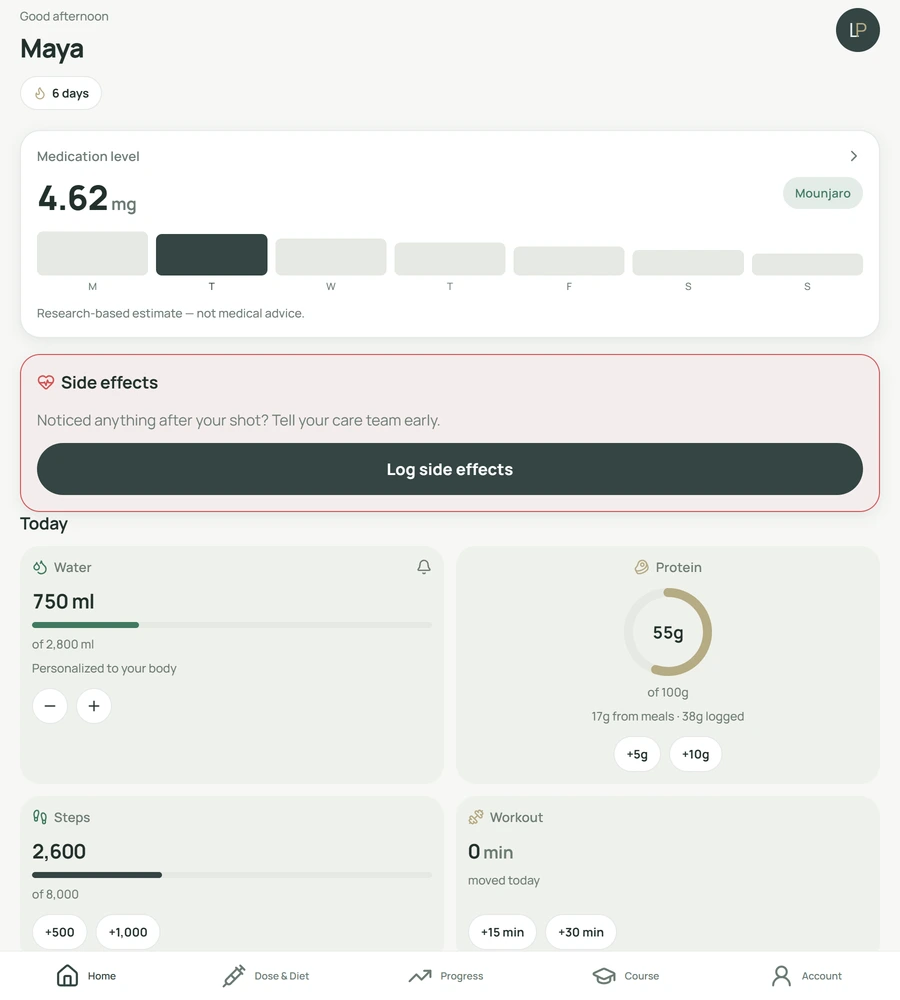
  • Daily care plan
  • Meal and hydration logging
  • Symptom reporting
  • Medication adherence
  • Weight and activity tracking
  • Educational content
  • Care-team connection
Patient application screen showing a daily care plan, meal and hydration logging, and medication adherence.
Lean Protocol Android app
02Existing workflow

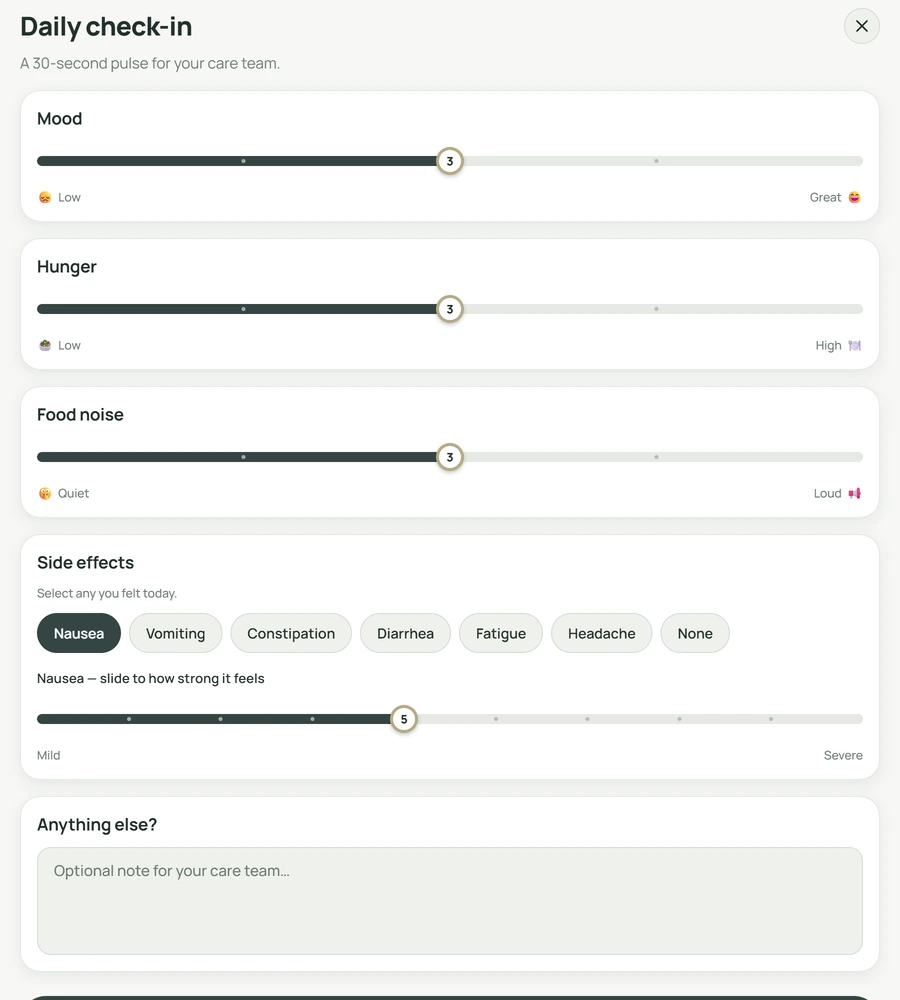
Symptoms and Adherence

Structured capture of side effects and dosing behaviour, so a deteriorating pattern is visible before it becomes an event.
  • Structured symptom reporting
  • Severity tracking
  • Symptom trends
  • Adherence monitoring
  • Trigger identification
  • Care-team notes
  • Early escalation support
Symptom reporting screen showing structured severity capture and symptom trends over time alongside adherence history.
Lean Protocol Android app
03Existing workflow

Clinician Command Centre

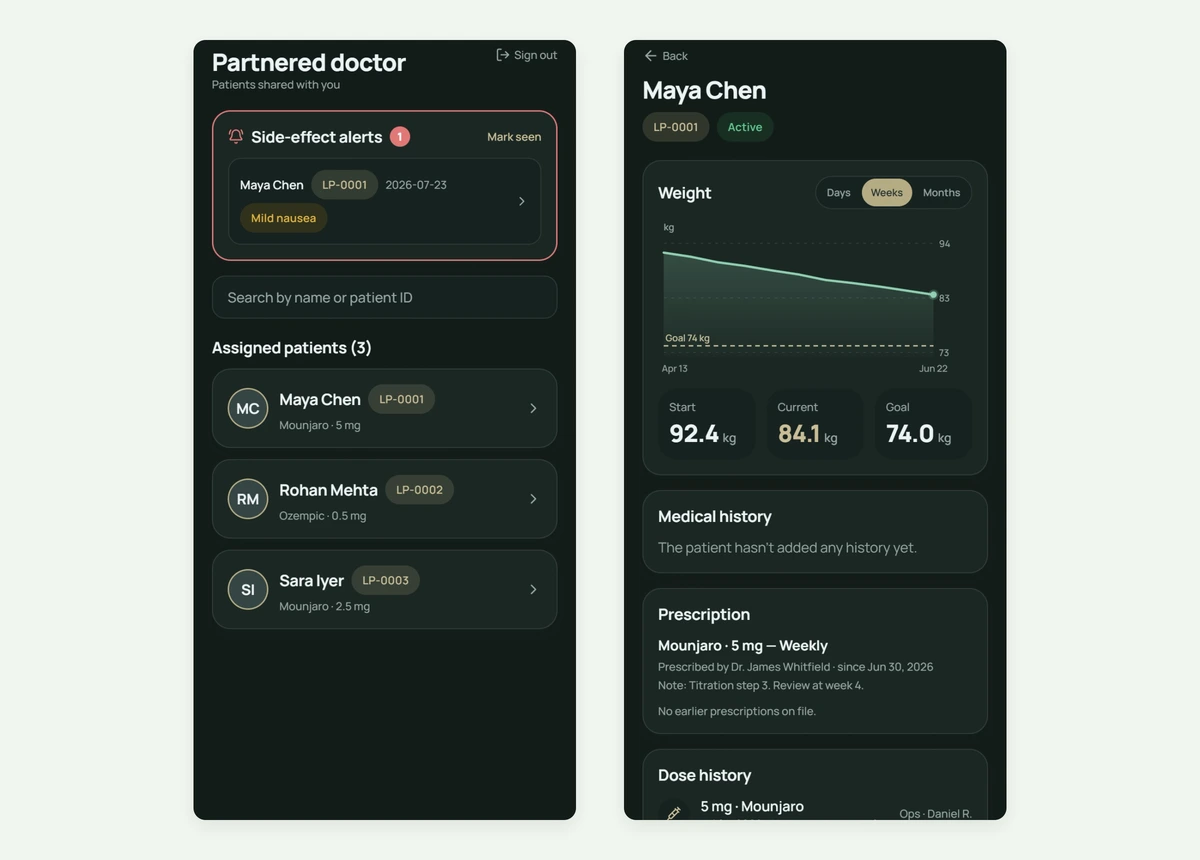
A prioritised queue that answers one question first: which patient needs a clinician today, and why.
  • Prioritised patient queue
  • Explainable alert factors
  • Risk summaries
  • Clinician approval workflow
  • Intervention history
  • Follow-up monitoring
Clinician dashboard showing a prioritised patient queue with reason-coded alerts and an approval workflow.
Lean Protocol Android app
04Proposed R&D module

Progress and Outcomes

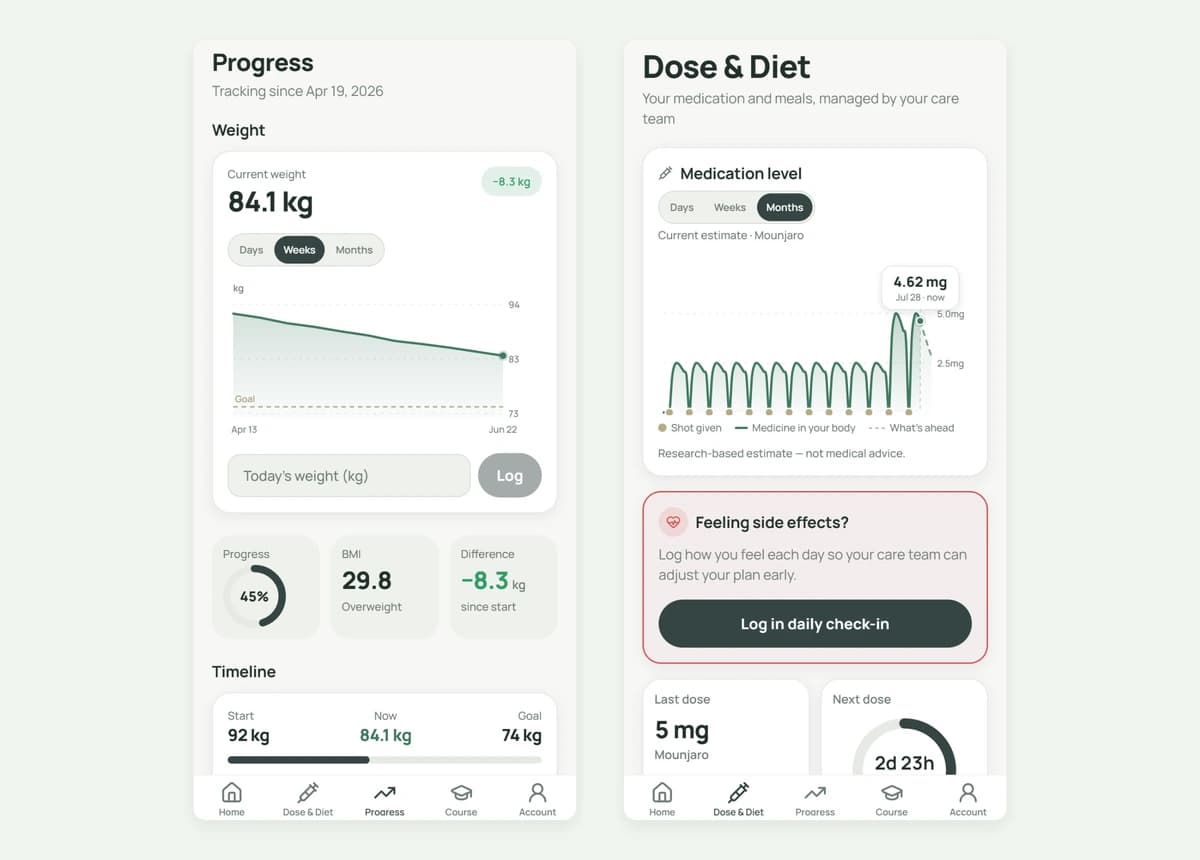
Longitudinal outcome capture at patient and programme level, structured for review and research.
  • Longitudinal weight trends
  • Symptom burden
  • Adherence trends
  • Intervention outcomes
  • Dropout-risk signals
  • Aggregate programme insights
Outcomes view showing longitudinal weight trend, symptom burden, adherence trend and intervention history.
Illustrative product interface

Technical distinctiveness

Not another generic health tracker

Proposed proprietary data and decision-support architecture.

India-specific diet and symptom ontology

Structures Indian meals, dietary habits, gastrointestinal triggers, hydration patterns and treatment behaviours into clinically useful information.

Longitudinal patient intelligence

Evaluates changing patterns across weeks rather than isolated daily entries.

Explainable decision support

Shows the contributing factors behind each risk signal rather than presenting an unexplained score.

Clinician feedback loop

Records reviewed interventions and outcomes so workflows can be refined over time.

Privacy by design

Uses consent-led collection, role-based access, auditable actions and limited health-data exposure.

Technical architecture
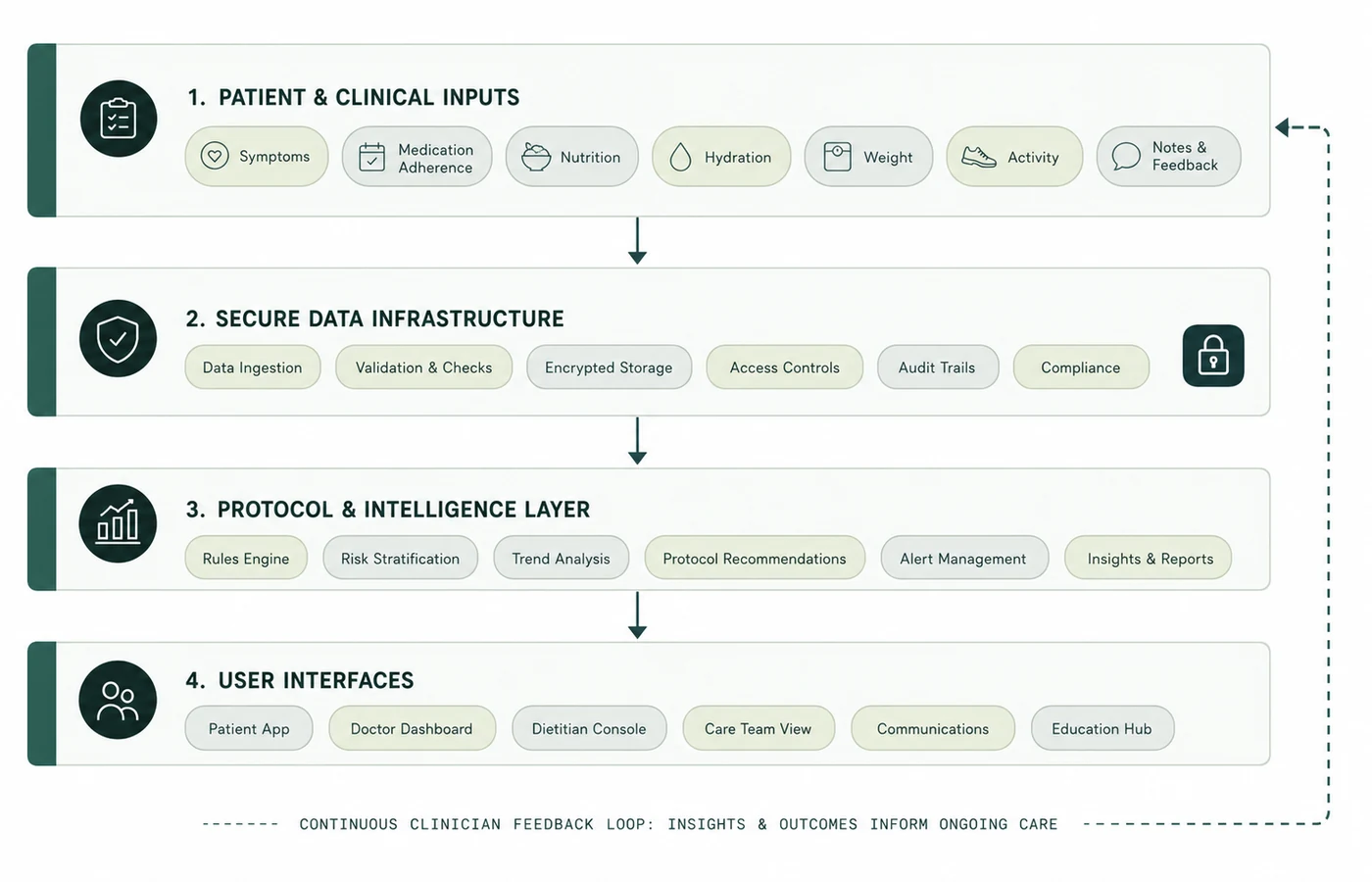
Designed as a modular and auditable healthcare platform

Proposed R&D module
Four-layer architecture diagram: patient and clinical inputs, secure data infrastructure, protocol and intelligence layer, and user interfaces.
Proposed architecture subject to technical, clinical, security and regulatory validation.

Layer 1

Patient and clinical inputs

  • Symptoms
  • Medication adherence
  • Weight
  • Nutrition
  • Hydration
  • Activity
  • Laboratory results
  • Clinician notes

Layer 2

Secure data infrastructure

  • Supabase PostgreSQL
  • Longitudinal patient records
  • Consent management
  • Role-based access
  • Audit logs
  • Secure storage

Layer 3

Protocol and intelligence layer

  • Clinical rules
  • Risk stratification
  • Adherence logic
  • Trend detection
  • Explainability
  • Intervention workflows

Layer 4

User interfaces

  • Patient application
  • Doctor dashboard
  • Dietitian dashboard
  • Operations dashboard
  • Outcomes dashboard

Proposed architecture subject to technical, clinical, security and regulatory validation.

Current stage

From an operating care workflow to a scalable technology platform

Existing workflow

Existing operational learning

  • Existing obesity-care delivery workflow
  • Doctor and dietitian involvement
  • Patient follow-up experience
  • Symptom-management experience
  • Medication-adherence experience
  • Operational understanding of patient dropout
Prototype under development

Product development underway

  • Patient application
  • Clinician dashboard
  • Structured symptom workflows
  • Data architecture
  • Care-team coordination workflows
Planned validation

R&D and validation required

  • Explainable risk engine
  • Clinical-rule validation
  • Prospective pilot
  • Security testing
  • Usability testing
  • Multi-site deployment readiness

Proposed SBIRI R&D programme

Proposed Research and Development Programme

Proposed R&D module

Project title

Development and Initial Validation of an Explainable Clinical Decision-Support Platform for Obesity-Treatment Monitoring and Adherence

Objectives

  1. 1Develop a secure longitudinal patient-data platform
  2. 2Build patient and clinician interfaces
  3. 3Formalise protocol-led risk and escalation workflows
  4. 4Develop explainable adherence and symptom intelligence
  5. 5Conduct initial technical and clinical validation
  6. 6Prepare the platform for controlled multi-clinic deployment

Proposed endpointA validated prototype ready for prospective clinical and operational evaluation.

Pilot and validation
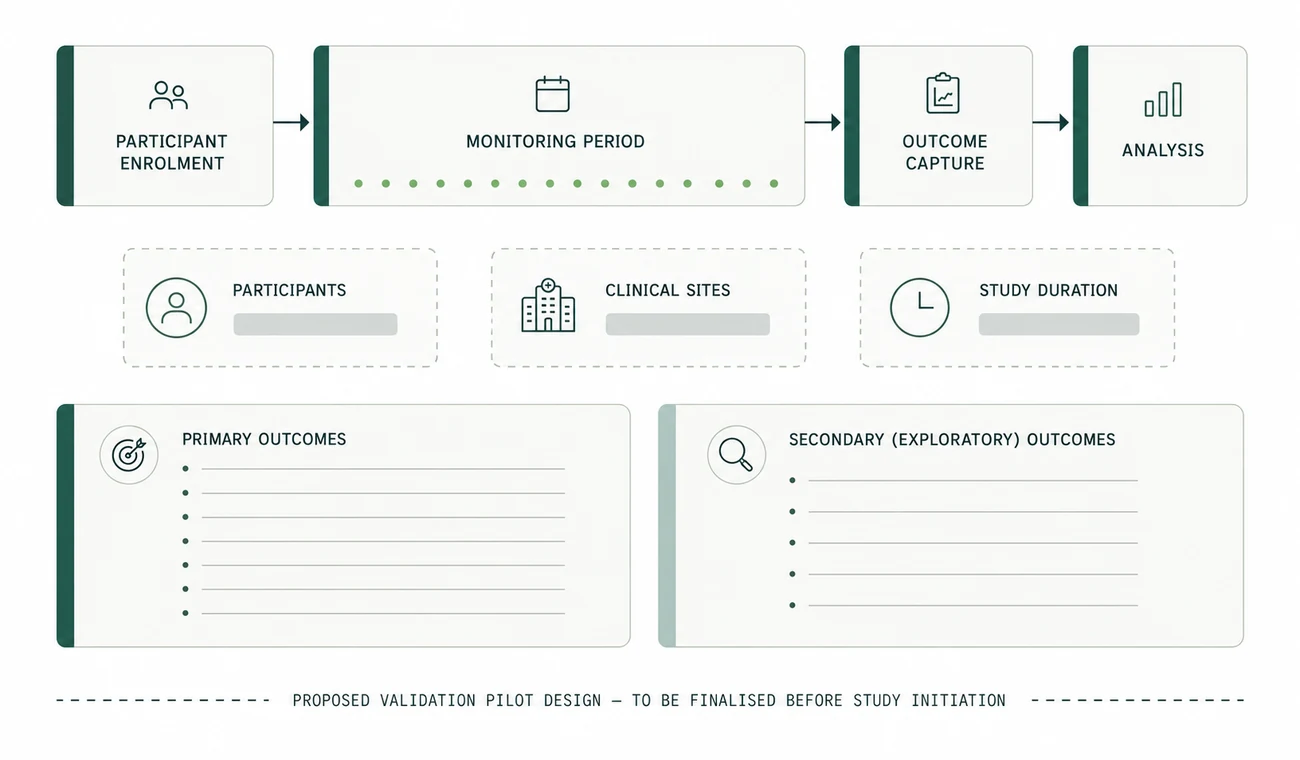
Validation focused on safety, adherence and clinical usability

Planned validation
Diagram of the proposed pilot: participant enrolment, monitoring period, outcome capture and analysis.
Proposed framework. Final protocol to be developed with clinical partners.

Proposed parameters

Participants

[INSERT PROPOSED NUMBER]

Clinical sites

[INSERT PROPOSED NUMBER]

Duration

[INSERT PROPOSED PERIOD]

Primary outcomes

  • Patient engagement
  • Completeness of symptom reporting
  • Medication-adherence tracking
  • Alert response time
  • Escalation completion
  • Clinician usability
  • Follow-up completion
  • Disengagement or dropout signals

Secondary exploratory outcomes

  • Change in symptom burden
  • Intervention acceptance
  • Continuity of follow-up
  • Clinician time saved
  • Patient understanding

The final protocol, endpoints, ethics requirements and statistical methodology will be developed with qualified clinical and research partners.

Accessible deployment

Designed for deployment beyond premium metropolitan care

Design intent, not current operations

The platform is being designed for scalable deployment across urban and underserved Tier-2 and Tier-3 clinical settings, where continuous specialist follow-up may be limited.
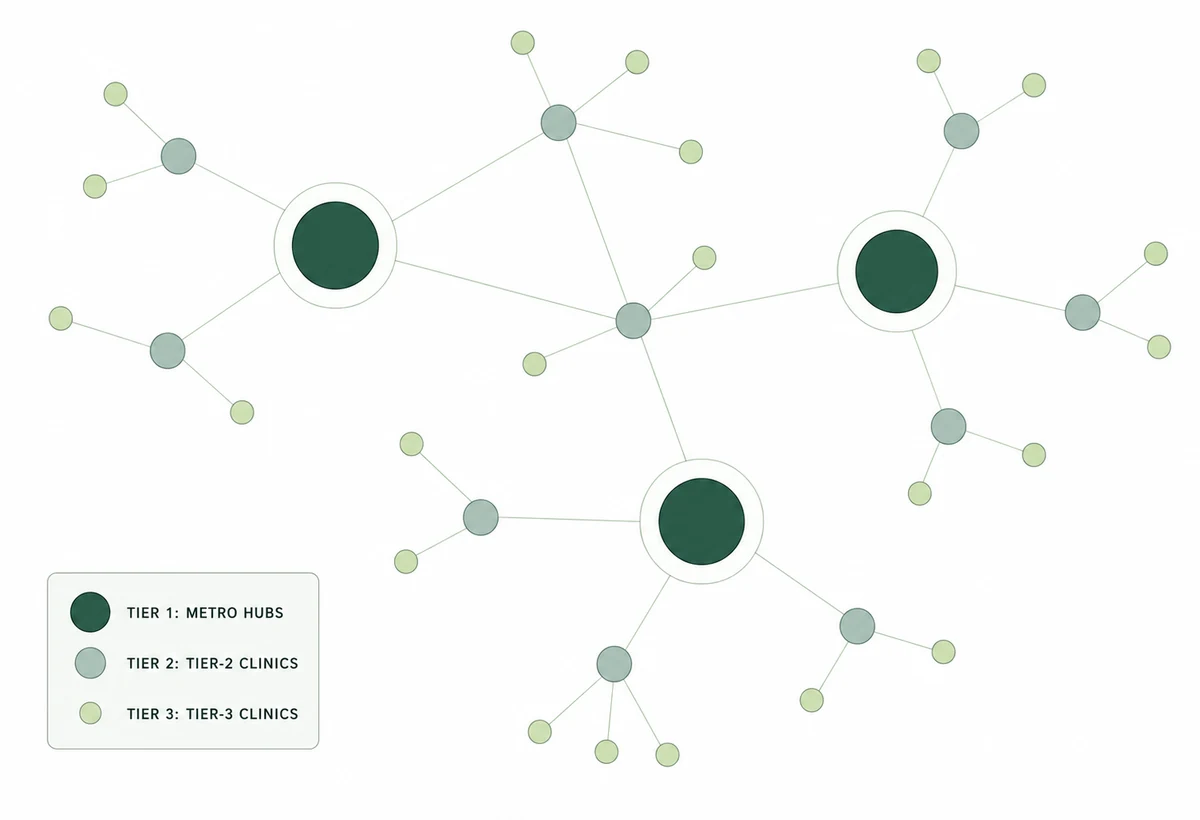
Diagram showing intended deployment across metropolitan, Tier-2 and Tier-3 clinical settings.
Illustrative deployment intent. Not a record of current operations.

Mobile-first access

Built for the device patients already own.

Low-bandwidth readiness

Designed to remain usable on constrained connections.

Multilingual interface potential

Interface strings structured for translation.

Clinic-assisted onboarding

Staff can enrol patients who need help getting started.

Simple patient reporting

Short structured inputs rather than free-text diaries.

Deployment through smaller clinics

No dependence on large hospital IT infrastructure.

Tier-2 and Tier-3 applicability

Designed for settings with limited specialist density.

Care-team support

Extends supervision where specialist access is intermittent.

Development roadmap
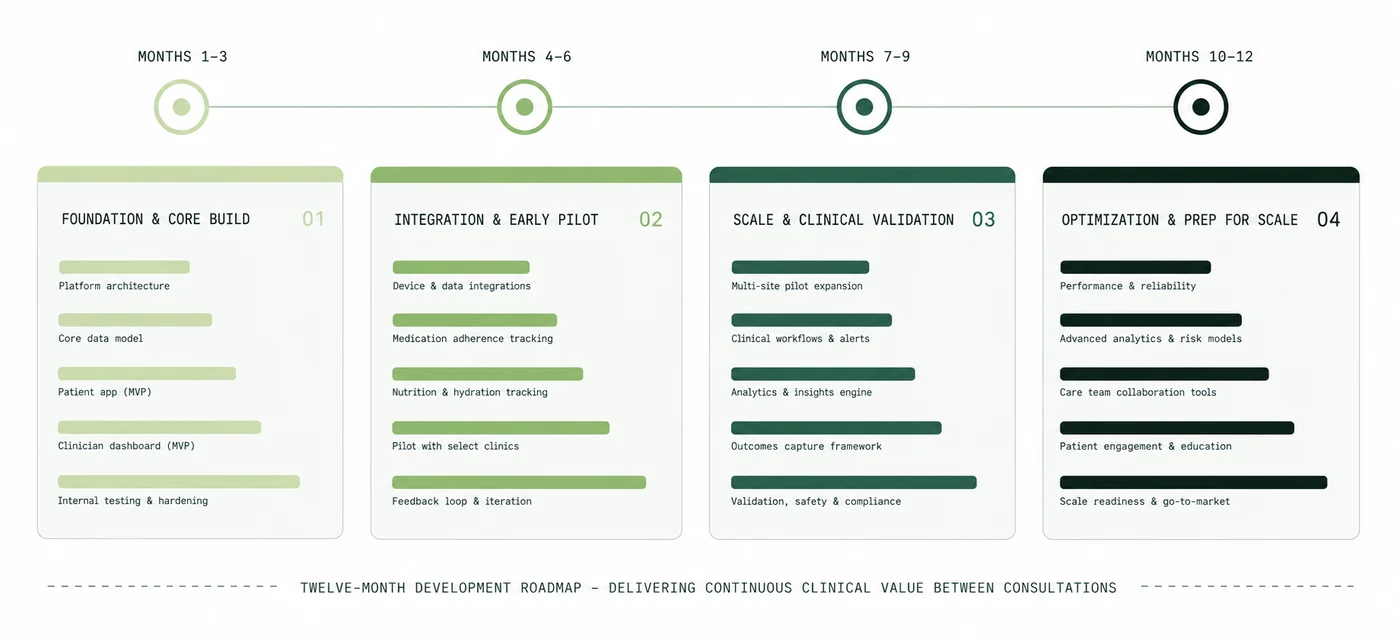
Phased development from prototype to deployment readiness

Planned validation
Twelve-month roadmap from architecture and workflow mapping through MVP build, controlled pilot, and validation reporting.
Proposed twelve-month development and validation roadmap.
  1. Months 1-3

    01

    Foundation

    • Architecture
    • Data schema
    • Clinical workflow mapping
    • UI flows
    • Consent framework
  2. Months 4-6

    02

    Build

    • Patient application MVP
    • Clinician dashboard
    • Initial clinical rules
    • Internal deployment
    • Quality assurance
  3. Months 7-9

    03

    Pilot

    • Controlled pilot
    • Data annotation
    • Alert-quality review
    • Usability feedback
    • Model and workflow refinement
  4. Months 10-12

    04

    Validation

    • Validation report
    • Security testing
    • IP documentation
    • Technical documentation
    • Clinic deployment package

End stateA demonstrable product with pilot evidence, clinician usability feedback and a roadmap to commercial deployment.

Clinical safety and governance

Clinical intelligence with human accountability

Clinician in the loop

Every escalation is reviewed and approved by a qualified professional before it reaches a patient.

Explainable alerts

Each alert shows the factors that produced it, so a clinician can agree or disagree on the evidence.

Defined escalation protocols

Thresholds and routes are written down in advance rather than decided case by case.

Auditable intervention history

Who saw what, when, and what they did is recorded and reviewable.

Scope and limitations

  • The platform is not a substitute for emergency care.
  • The platform does not independently diagnose.
  • The platform does not independently prescribe.
  • The platform does not change medication automatically.
  • Clinical decisions must be reviewed by qualified professionals.
  • Medical-device and regulatory classification will be evaluated as the product develops.

Team capability

Built at the intersection of clinical care, technology and patient operations

Roles without a confirmed appointment are marked as planned project roles.

Founder and CEO

Planned project role

Company direction, care operations and institutional partnerships.

Clinical lead

Planned project role

Clinical protocols, escalation thresholds and medical governance.

Product and technology lead

Planned project role

Platform architecture, security and delivery.

Nutrition and behavioural-care lead

Planned project role

Dietary protocols, adherence support and patient engagement.

AI and data-science advisor

Planned project role

Explainability, risk logic and evaluation methodology.

Regulatory or research advisor

Planned project role

Study design, ethics pathway and regulatory classification.

Collaboration

Collaborate on the future of obesity-care infrastructure

Contact

Contact the innovation team

Tell us how you would like to work together. Enquiries reach the innovation team directly.

Questions

Frequently asked questions

Is this a medical device?

Medical-device and regulatory classification will be evaluated as the product develops. The platform is designed as a monitoring and care-coordination layer that supports qualified professionals; it does not independently diagnose, prescribe or change medication.

Does the platform make clinical decisions?

No. It prioritises and explains. Every escalation is reviewed and approved by a qualified clinician before action is taken, and that review is recorded.

What stage is the product at today?

An obesity-care delivery workflow is already operating with clinicians and dietitians. The patient application, clinician dashboard and data architecture are under development. The explainable risk engine, clinical-rule validation and prospective pilot are proposed R&D.

Are the interfaces shown on this page live?

No. Every interface shown is labelled as an illustrative product interface or a prototype under development. None should be read as a deployed feature.

How is patient data protected?

The design uses consent-led collection, role-based access, audit logging and limited health-data exposure. Security testing is included in the proposed validation programme.

Where would the platform be deployed?

It is being designed for urban as well as Tier-2 and Tier-3 clinical settings, where continuous specialist follow-up may be limited. Deployment claims will be made only once sites are confirmed.